Showing posts with label history. Show all posts

Monday, December 16, 2013

Movie Review - Argo

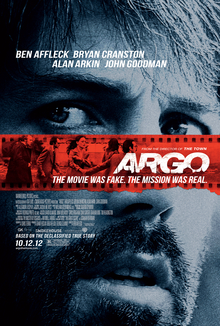
Argo - (2012) - Based (somewhat loosely) on the rescue of six Americans that escaped from the U.S. Embassy in Tehran at the beginning of the Iranian Hostage Crisis in 1980.  A plan to get them out under cover of a fake movie company working on a movie called "Argo".  The question is always will they escaped before the Iranians unravel the story?

Three Academy Awards, two Golden Globes, a Screen Actors Guild Award, the accolades are pretty impressive for this one.  And with good reason.  This is a great thriller.  It has all the tension you could want.  Ben Affleck plays the American extraction expert Tony Mendez who will have to go into Iran and pull off the deception.  The six in hiding aren't all convinced that this is a good idea which raises the stakes even higher.  All it will take is one slip and they will all go down.  Iran at that moment in time bore entirely too many similarities to the Reign of Terror that followed the French Revolution.  It's a great set up for the story.

It's also one of those places where you need to divide fact from fiction.  The screenplay takes some serious liberties with the truth.  (It also takes quite a few minor liberties but that's normal.  You need to move things around sometimes for movie story telling.  I have no trouble with that at all).  The worst is downplaying the role of the Canadian Embassy in the rescue.  President Carter has been quoted as saying "90%" of the idea behind the rescue was Canadian.  And while the real Tony Mendez did do the extraction he was in Tehran for a grand total of a day and a half.  Affleck tries to make up for the snub of the real heroes behind the  rescue with a post-script on the movie but it comes off flat.  That's unfortunate.  It reinforces the perception in parts of the world that Americans are self centered egotists who need to hold the spotlight at all times.

That to one side - it's a lot of fun to watch.

Rating - **** Recommended (but read the history afterwards)

Friday, October 18, 2013

No More Real Life, Hump Daaaaay! and Chasing Youth


 "The View From the Phlipside" is a media commentary program airing on WRFA-LP, Jamestown NY.  It can be heard Monday through Friday just after 8 AM and 5 PM.  The following are scripts which may not exactly match the aired version of the program.  Mostly because the host may suddenly choose to add or subtract words at a moments notice.  WRFA-LP is not responsible for any such silliness or the opinions expressed.  You can listen to a live stream of WRFA or find a podcast of this program at wrfalp.com.  Copyright 2013 by Jay Phillippi.  All Rights Reserved.  You like what you see?  Drop me a line and we can talk.

Program scripts from week of October 13, 2013


My name is Jay Phillippi and I've spent my life in and around the media.  TV, radio, the movies and more.  I love them, and I hate them and I always have an opinion.  Call this the View from the Phlipside. 

Chasing Youth                                                                                         

What are the kids doing?  That is the most often asked question in your life if you are A: a parent or B: an advertising executive.  For the parent the question is usually about whether little Johnny is eating dirt again or where Suzy and boyfriend have suddenly disappeared to.  If you’re in advertising the hope is that if you can keep up with what younger folks are doing you will be successful in your chosen line of work.

Those two groups usually have one other thing in common.  They get the answer to that question wrong more often than they like.

Sticking to the media side of the equation the biggest problem is that not only are younger media consumers hard to predict under the best of circumstances but also that we are living in a time period where they can change more quickly and move in more directions than ever before.

Facebook and Twitter are rapidly disappearing in the media rear view for many younger consumers.  Oh they’re still there but it’s no longer THE place to be.  Which means that by the time the media establishment has cranked up its machinery the target has moved again.  Expectations are different, needs are different.  Plus if you’re in the advertising sales end of the business you need to remember that a lot of this generation actively uses software to block your ads.

Here’s another place that the media is struggling.  A new longitudinal study done by the folks at Pew shows that the youngest consumers spend less time with the news than their elders do.  The post retirement generation spends over 80 minutes a day with the news.  The sub-30 generation is right around 46 minutes.  I wonder how much of that disparity is covered by the difference in media between the two generations.  If you’re getting your news mostly online you can scan through to what you want much more efficiently than waiting on radio or TV to deliver it.  My problem is that the media tends to focus on the lower time spent viewing rather figuring out to better serve that demographic in the time available.  Solve that question and you just might see growth.

The one thing that is guaranteed in this pursuit of youth is that there will continue to be as many or more misses than hits.  

But then any parent could tell you that.


Hump Daaaaay!                                                                                                  

There’s that wonderful, weird moment when something that was created for a specific purpose suddenly veers into the other lane and takes off.  Of course the general rule is that any public recognition is good recognition.  That doesn’t really work in real life.  So I always wonder what goes through the minds of companies who see something from their advertising plan takes on a life of its own.

Never forget the goal of advertising is to separate you the consumer from your money.  In the long run that is its purpose in life.  The short run may include things like changing your mind or convincing you of a certain point but in the long run they are there to get your money in exchange for some product or service that you probably don’t need.

So what do the folks at GEICO think when they find out that one of their ads has become a problem at schools across the nation.  First we have to sort through all the various GEICO ads.  The insurance company still amazes me because they are running so many different campaigns all at the same time.  My bet is you know the spot.  It involves the phrase “Mike, Mike, Mike, Mike” and the problem phrase itself “Hump DAAAAAAY!”.  That’s right, the GEICO camel spot.

Beyond the fact that it’s annoying, no wait, it’s BECAUSE it’s annoying that it’s a problem.  I will admit that I have a soft spot for this ad.  It pleases me deep down in that 9 year old boy part of my personality.

The problem seems to be with, well, 9 year old boys.  A lot of schools are banning that phrase.  I have no doubt that many Middle Schools and Junior Highs are disrupted every Wednesday when the boys break out their best camel imitations at the top of their lungs.  Funny once, maybe twice.  By the end of the day, following hour after hour of it, I’m quite certain that many teachers and school administrators are ready to slam their heads into the wall.

Which brings me back to the folks at GEICO.  You can’t REALLY be happy that your advertising is seen as a big enough disruption of the education system that it’s actively being banned.  How do you react when one of your ads has gone viral, has become a catchword in the culture?  

My bet?

They’re laughing all the way to the bank.


No More Real Life                                                                                                             

Why do you go to the movies?  That’s a serious question, by the way.  Why do you go to the movies?  I love the movies but why?  I love the epic quality of stories told on the big screen.  I love the relief from reality that the movies have always offered.  When I watch a movie I can be a superhero or even just a regular hero.  I can explore far parts of this world or leave this world entirely and explore other times and places.  Along the way I can be challenged, I can be amused, I can be moved.  I go to the movies because no other media can tell those stories in quite the same way.  Some other media do some parts of storytelling better and some parts worse.  I love movies for what they do well.

So let me ask you this - do you go to the movies to learn history?  If you answered yes I want you to seriously re-consider that answer.  The movies are about storytelling.  Consequently accurately representing historical events comes at best a distant second and more than likely a distant third, fourth or fifth.  Now at this point someone is going to say “What about documentaries?”.  Well let me ask another question and be honest.  In the last 10 years how often have you gone to the movies, meaning gone out to a theater because the essence of the theater experience, and watched a documentary?  If you’re like most Americans that’s probably what, once?  So that’s not really a significant part of the average movie goers experience.

I know when I go in that if the movie is “based on actual events” there’s going to be a certain percentage of the story that gets shuffled, edited or flat out dropped to advance the movie storytelling.  For example you don’t want to bring up last year’s movie “Argo” in Canada.  The movie focused on the rescue of some of the hostages held by Iran in 1979.  What’s upset the Canadians?  Simple, in real life they played an important part, a major part in that rescue.  You’ll never know it by watching the movie, because it got edited out.  This comes up now because folks are upset with some artistic license employed in the telling of the new Tom Hanks movie “Captain Phillips”. 

Here’s what I wish the bottom line could be.  I wish the movies would drop the whole “based on actual events”.  Be inspired by real life, tell the story that relates the important parts of the history, use the wonderful storytelling tools at your disposal and do that.

Then the rest of us can stop fact checking and just sit back and enjoy the movies.

Call that the View From the Phlipside

Wednesday, May 15, 2013

Book Review - The Men Who Lost America

The Men Who Lost America - British Leadership, the American Revolution, and the Fate of the Empire. By Andrew Jackson O'Shaughnessy

In school we all learned the American mythology of how we won our independence from Great Britain.  It wasn't until I was in college that some of the detail of that part of our history was drawn into clearer focus.  Too often the American victory is taken as inevitable. Us good, them bad, we win.  As always the truth is much more nuanced than that.

The second level of understanding usually takes us to the "poor leadership" model.  The military officers were second rate and the governmental leaders were fools.  That's still a pretty simplistic look at what in fact is a complex and difficult piece of historical terrain.

Author O'Shaughnessy takes us to a whole new place (as Americans that is) and looks at the war from the point of view of those who lead it and opposed it on the British side.  Ten pivotal people are examined and their roles dissected.  The picture that emerges is fascinating.  From King George III to his Prime Minster Lord North (who disliked the term Prime Minister, did not use it and asked repeatedly for years to be allowed to resign) to the commanders in the field (the brothers Howe, one a general the other an admiral, Burgoyne, Cornwallis and Rodney) the task they set before themselves never matched the reality that awaited in the colonies.  The government was split on the subject of the war.  As a result sometimes contradictory instructions were sent to the commanders.  The Army chose repeatedly to use tactics seemingly designed to make their life hard.  The use of German mercenaries was seen as an insult by those who saw this as a conflict among English peoples.  Beyond that were the use of plunder and terror that simply stiffened the opposition.  Add in the bits that we were taught - over extended supply lines, slow communication, byzantine administration and often enormous egos - and the situation was essentially unwinnable from the start.

Now on the American side there were similar problems.  A weak central government that was essentially bankrupt, divided on the subject of the war and always capable of giving contradictory instruction to its generals.  It was only because of the quality of the military leadership on BOTH sides that this war went on as long as it did.  The political leadership in England remained in some quarters astoundingly tone deaf to what was actually happening in America.  Some of them, including the King, wanted to continue on fighting even after Cornwallis's surrender.

Beyond the fine story telling and wonderful insight that O'Shaughnessy brings to the story I was struck by the parallels to modern American history.  Now we are the world power attempting to bring order to the world through military might.  Too often it seems we are as tone deaf to the reality of the situations in those countries where we have been fighting for a decade as King George III was.  His book stands as a stern warning of what may lie before us is we insist on following that path.

For the history lover this is a great book.  I would expect that those dedicated to the history of the War of Independence will classify this one as a must have.

"The Men Who Lost America" will hit bookshelves on June 28, 2013.

Rating - **** Recommended 

Sunday, October 28, 2012

Book reviews - Philip K. Dick and Trivial Knowledge

I'm a little behind on the books.  Lots of travelling gives me lots of time to rip through my reading list.

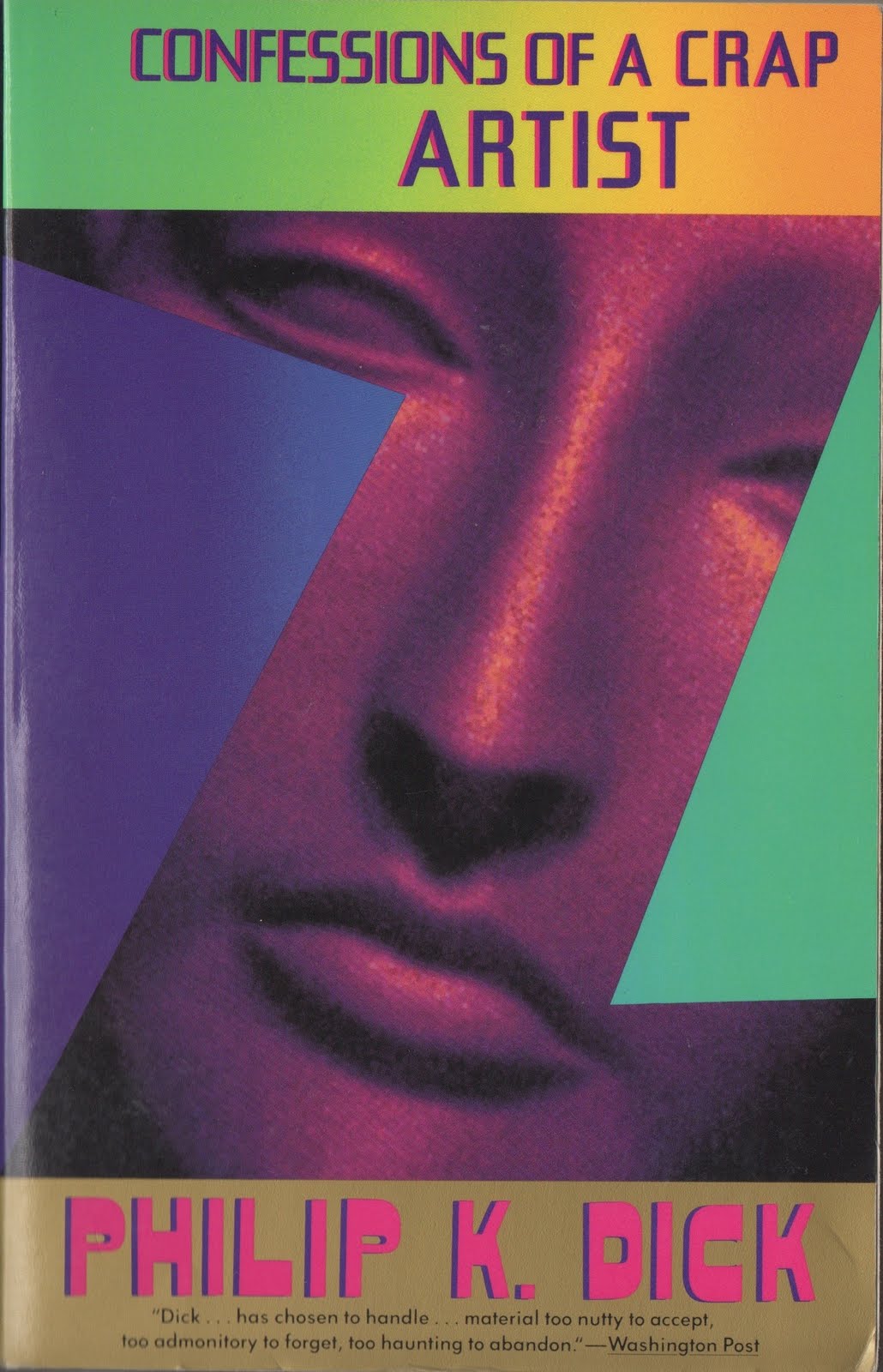
Confession of a Crap Artist - Philip K. Dick (originally published in 1975 but written in 1959)  This is a strange but fascinating story of  Jack, a man who views the world from a peculiar and unique point of view and his narcissistic sister Fay and her husband Charley.  Jack suffers from some kind of mental disorder and isn't really prepared to deal with the real world head on.  He ends up living with his sister and brother-in-law and realizes that there are worse conditions in the world than his.  It is Charley who dubs Jack a "crap artist" which would translate as "bullshitter" today. Eventually the mutually destructive nature of Fay and Charley's relationship will drive them to destroy everything they love.  Along the way they will take others right along with them.  It is a delightful and idiosyncratic look at life in California in the '50s.  At least among a certain set.

Dick is really working his writing genius in this one even as he largely strays from the mysticism and science fiction that most of us associate with him.  The point of view of the story moves from character to character with very little indication that it's about to happen.  Yet within a few chapters I didn't find it at all difficult to follow along.  You figure out pretty quickly that Jack may be the only sane person in the book.  He is consistent in pursuing his vision of how he should live his life.  Everyone else is deeply caught up in their own illusions which end up destroying all of them.

This isn't his best known novel but it's well worth your time.

Rating - **** Recommended Read

I'm going to lump these next books together.  They are of a category that I have always loved.  Call them "Volumes of Trivial Knowledge".  I was the kid who would lie on the floor on a rainy weekend and read the encyclopedia.  Just pick a volume at random and open it at random and start reading.  When things like "The Book of Lists" and "The People's Almanac" came along I was in seventh heaven.  These books belong in that same category.

A Little Bit of Everything for Dummies (2011), The Trivia Lover's Guide to the World (2012), and A Short History of the World (2012) are all great additions to the tradition.  Each one has it's own slant.  The Dummies book is just what it says, a little bit of everything tapped from the vast ocean of material that the series has covered in the last 20+ years.  This includes fun stuff, lifestyle stuff, social stuff and even some around the world stuff.  Which led quite nicely into the Guide to the World which is geography based.  I pride myself on being above average in geographical literacy but it got me going several times.  Two of my favorites - What is the first foreign country you come to going south from Detroit MI and what South American country do you hit first if you drove south from Chicago IL?  Answers?  Canada and none.  As a wise man once said "You could look it up".  The Short History attempts to give you a quick but thorough overview of the history of the globe.  Taking what the author believes are the most important events he weaves a connected narrative rather than just a recitation of facts.  They're all fun reads.

Rating ***/****  Worth a Look (for the average reader)/Recommended Read (for the Trivial Knowledge Junkie)

Monday, October 1, 2012

Book - The Elizabethans

The Elizabethans by A.N. Wilson  The age of Elizabeth the First is arguably one of the two great eras in the history of England (the other being the reign of Victoria).  It is an age of exploration, the arts, the creation of the church tradition that would become my own, the birth of the tiny island nation into a power in its own right (rather than being an appendage to European holdings) and all led by a woman of brilliance and ruthlessness.

Sadly you will have struggle to piece that story together from A.N. Wilson's book on the subject.  The best image I can give you for how this book tells this story is to ask you to imagine (or remember) a professor at college who was deep with the knowledge of his or her subject.  Knew it front to back and back to front.  But who had the unfortunate habit of becoming distracted and wandering off in mid-lecture on one subject to examine some other subject that may have only the most tenuous of connections with the first.  That's the way this book reads.  If you are looking for a linear telling of the story of The Virgin Queen's reign you're going to struggle.  There is a linear progression but the side trips just strip away any sense of the overall flow of history.

Let me offer two examples:
A chapter titled "Elizabethan Women".  Now here's a concept that sounded fascinating.  How did the rule of a Queen as absolute monarch affect the place of the rest of her gender?  The chapter is 18 pages long and the first 10 are mostly about women (there's a long discussion of marriage but that was the central issue for both Elizabeth and the ladies of her age) although it should be noted that the discussion is only of "gentlewomen" and no mention is made of the "lower classes" (a fairly consistent approach throughout).  Most of the rest of the chapter is about architecture.  It is led into by the story of Bess Hardwick who through marriage and the death of her husbands become one of the kingdom's great landholders.  But she's only a launching pad for 8 pages of discussion that have nothing to do with the Elizabethan Women.

Likewise a chapter on Sir Philip Sidney.  Sidney is heir to one of the influential families of the age.  His greatest claims to fame are his writing, especially his prose "The Countess of Pembroke's Arcadia" and his sonnets, plus dying young from his wounds taken in battle.  His funeral was the largest ever seen in London.  On the whole he was a bit of a pop star at the time.  This chapter runs 11 pages and Sidney isn't even mentioned for the first four.  The next four give us the history of his brief life (32 at the time of his death).  The final three pages might possibly be described as outlining his legacy but they really aren't.  They discuss his contemporaries in the arts with virtually no reference to him at all.  Given that he was considered one of the great stars of his time both at court and in the public it strikes me as a paltry offering.

But that's pretty much the way the book goes.  It wanders this way and that.  When Wilson gets his teeth into the story of some place, event or person the book is a joy to read.  Beyond the authorial wandering you are also burdened with quotes done in the original Elizabethan spelling although others are "translated".  There didn't seem to be rhyme nor reason to which ones were or weren't put into modern spellings.  It becomes one hurdle after another at times.

If you want a well written (if somewhat opinionated) outline of the Elizabethan Age this is not a bad addition. If what you want is a clear and concise examination of the Age I can only hope there's something else out there.  The book only just squeaks into its rating class.
Rating - *** Worth A Look
Saturday, September 22, 2012

Rise of the Tablet, You Could Look It Up (A Rant), and Historical Trend


 "The View From the Phlipside" is a media commentary program airing on WRFA-LP, Jamestown NY.  It can be heard Tuesday through Friday just after 8 AM and 5 PM.  The following are scripts which may not exactly match the aired version of the program.  Mostly because the host may suddenly choose to add or subtract words at a moments notice.  WRFA-LP is not responsible for any such silliness or the opinions expressed.  You can listen to a live stream of WRFA or find a podcast of this program at wrfalp.com.  Copyright 2012 by Jay Phillippi.  All Rights Reserved.  You like what you see?  Drop me a line and we can talk.

Program scripts from week of September 17, 2012

My name is Jay Phillippi and I've spent my life in and around the media.  TV, radio, the movies and more.  I love them, and I hate them and I always have an opinion.  Call this the View from the Phlipside. 


The Rise of the Tablet                                                                                               

 I am fascinated by the impact that is being felt all across the media world with the meteoric rise of the tablet computer.  Folks have been trying to make a go the tablet concept for years now and none of them have managed to hit the sweet spot of versatility, ease of use and price that tablets seem to have found in just the last couple years.  Even Apple’s first attempt, the Newton, crashed and burned.  They’ve done it by making being a computer secondary to being a media delivery system.  In barely two years tablet computers have become the most powerful force for change in the popular technology world.  Think I’m over stating my case?  Let’s take a look.

One of the big movements in how we deal with media is the fact that more and more of us are doing it on multiple screens now.  This is especially profound on how we watch television.  Take a look at the number of television shows and even commercials that invite you get involved with the program by checking into the show’s forum or Twitter feed or Facebook page.  This is not television leading the way (it almost never leads the way) it’s TV reacting to what’s already going on.  There are so many people already cyber-chatting about their favorite shows that the networks are just climbing on the band wagon.

Even more than that now you don’t even need the television any more.  More folks are choosing to watch programming on their tablets on the move.  

You can’t do that with a desktop and it’s even awkward with a laptop or a netbook.  But it’s a piece of cake with a tablet.  Yes, smart phones play a huge role in this as well but smart phones and tablets are headed toward an inevitable collision right now.  And the tablet is going to win because it’s a better experience of the media we’ll be watching than a phone screen.

Still don’t think that tablets are going to take over your future?  Then check out this - Toys R Us is launching the Tabeo.  A tablet computer aimed at children.  Pre-loaded with over 50 apps and with a library of six thousand educational programs and games.  All for $149.  And it’s a serious tablet.

Why would there be a market for that?  Easy.  If the kid has their own tablet they won’t keep trying to borrow yours.  And that means you can keep telling your friends how awesome the latest episode of “Breaking Bad” is.


You Could Look It Up                                                                                                

The following is a rant.  Pure and simple.  Some folks out there have finally pushed me over the edge and I just can’t take it any more.  You have been warned.

We live in a age where billions upon billions of bits of information at our very finger tips.  We are surrounded by it and with our computers we have access to it in just a matter of seconds.  Now I need to also note that our computers give us access to millions of pieces of junk as well.  Rumors, hoaxes, opinion masquerading as fact and imagination run wild.  If you’ve spent more than 10 minutes out there you would know that.

Well you’d know that if you bothered to pay any attention.  Here’s the problem as I see it.  Too many people are just lazy.  And with that I’m being kind because the more cynical, angry side of me wants to say that they’re just stupid.  But I’ll behave myself and stick with lazy.

So what is it that has finally pushed my button and gotten on my last nerve?  People who don’t take a couple seconds to check on something before accepting something on blind faith.  In the last two weeks we’ve had hoaxes concerning the death of beloved comedian Bill Cosby and iconic actor Morgan Freeman.  Now I want you to know I double checked both of those items.  In fact let me do it right now.  Minimize the window where I’m recording this program, open my browser, open Google, type in Morgan Freeman.  Hit enter.

And Google tells me 10 personal results. 76,500,000 other results.  Boom, just that simple.

So explain to me why people just blindly follow along on things like this?  Why do they continue to click on links that claim Microsoft (or any of a dozen other companies) will give away money every time you click?  Why do the repeat absurd claims about celebrities, politicians or religious groups?

I think I know the answer.  Because it’s easier than thinking.  It’s easier than exercising our critical thinking muscles.  It’s because we’re lazy.

All that information at our finger tips and we still want to believe that Mr. Rogers was a Marine Corps sniper or that in December the universe will align in such a way that will result in a world wide blackout.

Really?  Really?  Try a little mental exercise instead.
Rant over.


Historical Trend

There are a couple of movies coming out between now and the end of the year if memory serves that I am very interested in getting a look at.  First because they involve characters about whom I am profoundly interested, second because they involve actors for whom I have great respect and third because they are not the kind of movie we generally get from Hollywood these days.  They are historical stories involving two of America’s great Presidents.

The first one I heard about was “Hyde Park on the Hudson” which tells the story of the visit by King George VI of England and his wife Queen Elizabeth (parents of the current queen) to the Roosevelt home in 1939.  The meeting was of great historic importance coming just before the war.  This is the same king we saw in the movie “The King’s Speech” two years ago (portrayed by a different actor of course).  But what really grabbed me was discovering that comedian Bill Murray had been cast as Franklin Delano Roosevelt.  The trailer for the movie shows Murray at his absolute best disappearing into the role.  The movie debuts here on December 7.

Alone that might have been an interesting aberration.  When you add in Daniel Day Lewis as Abraham Lincoln in the movie “Lincoln” suddenly you have an interesting mini-trend.  The trailer for this movie also shows the actor doing a wonderful turn as the former President.  Because Lincoln lived before the advent of audio recording we don’t know the sound of his voice the way we do FDR’s.  That may be the easiest part of taking on the role of an American icon.  “Lincoln” debuts November 16.

The real question for me is what will the audience reaction be?  Coming right after the election will we be too exhausted by politics to want to hear any more?  “Lincoln” will focus on the intense pressures on a President of a nation split by Civil War.  Or will the return to a simpler time and supposedly simpler issues have an appeal?  

Once upon a time biographical pictures like this of the great figures in our history were more common.  The history they portrayed was not always very accurate.  My hope is that a couple great movies with great casts and hopefully decent history could re-ignite an interest in our own history that seems sadly lacking these days.  It almost makes me wish that these movies had come out BEFORE the election.  Now is the time when we could all use a clearer understanding of our roots.


Call that the View From the Phlipside.

Sunday, September 16, 2012

Book Review - The Maid and the Queen

The Maid and The Queen - The Secret History of Joan of Arc by Nancy Goldstone - This is a fascinating background history of a woman who was deeply involved in the events surrounding the Maid of Orleans,  Yolande of Aragon, Queen of Sicily.  Yolande was one of the great powers "behind the throne" in the closing decades of the Hundred Year War.  Without her Joan would not have had the circumstances she needed to inspire France to victory at Orleans and posthumously over the English.  Yet Yolande has been largely forgotten by history.  This book will do much to return her to her proper place in the history of that time.
  Inevitably such a history will diminish Joan at least a little.    While Goldstone never dismisses Joan's visions entirely she is quick to point out how the Maid could have ended up where she did through the help of the Queen and others.  At the same time she recognizes that Joan served as an immensely important symbol for France and that without that inspiration the Hundred Years War likely would have had a very different outcome.  The reader can make up their own mind about the intersection of the Divine and the political.
  The section detailing Joan's treatment in the hands of the English leading up to the foregone conclusion of her burning is disturbing.  As was common in that time (or perhaps any time if we're honest) rules were made to be followed only when convenient.  The English examiners knew what they wanted from Joan and pressured and abused her till they got what they wanted.  In the end she was burned for largely for wearing men's clothes and consorting with faeries.  Seriously.
The first question for me when someone recommends a history is "Did a writer or an historian write it?".  The difference is readability.  Some historians are good story tellers but too often the historian's version is done in a very academic style and format that works for the technical needs of historians but it just a struggle for the regular reader.  Goldstone is a fine story teller and that makes the history something you WANT to read.
(It's worth reading Goldstone's bio for the fascinating story of how she became an author.  Really amazing)
A truly enjoyable read and a great addition to the history of the age.
Rating - ****Recommended Read